
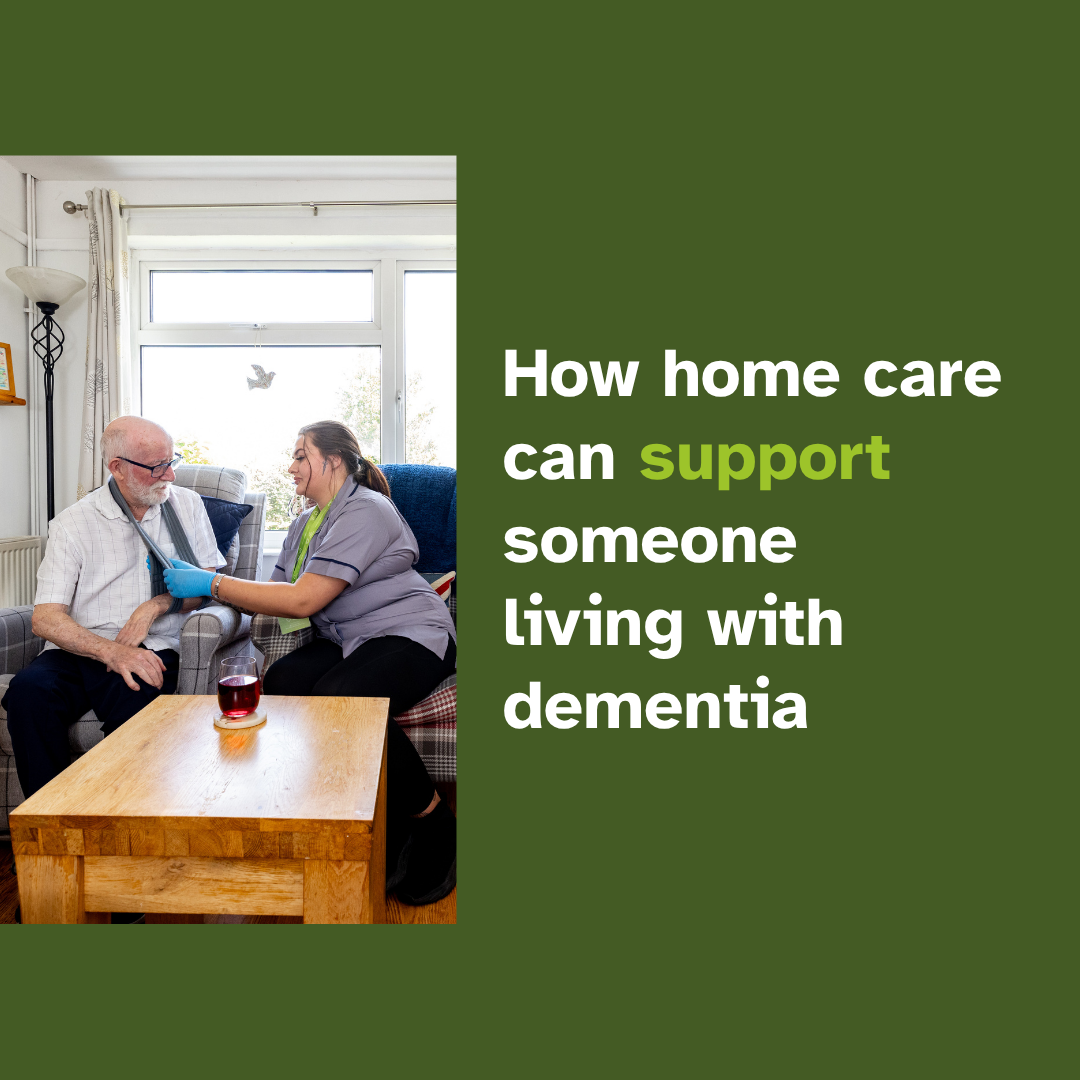
A dementia diagnosis can bring many questions and uncertainties – both for the person living with dementia and for the people who care about them.
Dementia affects everyone differently, and many people continue to live safely, comfortably and independently at home for a long time with the right support in place. For many families, home care can provide practical help, reassurance and continuity while allowing a loved one to remain in familiar surroundings.
Why staying at home matters
Home is often where people feel most comfortable and confident. Familiar rooms, treasured possessions, established routines and neighbourhood connections can all help someone living with dementia feel more secure.
Moving into an unfamiliar environment can sometimes be unsettling, particularly when memory and cognitive abilities are affected. Home care can help people maintain their independence while receiving the support they need in a place they know and love.
How dementia can affect everyday life
Dementia is an umbrella term for a range of conditions that affect memory, thinking, communication and daily functioning. Symptoms may include:
- Forgetting appointments or important information
- Difficulty managing medication
- Becoming confused about time or place
- Changes in mood or behaviour
- Challenges with personal care and household tasks
- Feeling isolated or anxious
As needs change over time, many families find themselves providing increasing levels of support. This can be rewarding, but it can also be physically and emotionally demanding.
How home care can help
Dementia care is about much more than practical assistance. It is about understanding the individual, building trust and supporting them to live as independently as possible.
Personal care and daily routines
A familiar routine can be particularly important for someone living with dementia.
Home carers can support with:
- Washing and dressing
- Personal hygiene
- Toileting support
- Meal preparation
- Medication assistance
- Mobility support
Having consistent carers who understand a person’s preferences and routines can help reduce anxiety and promote confidence.
Companionship and social connection
Many people living with dementia experience loneliness or become less confident about going out independently.
Companionship care can provide:
- Regular conversation and social interaction
- Support with hobbies and interests
- Accompaniment to appointments or community activities
- Encouragement to remain active and engaged
Small moments – sharing a cup of tea, looking through photographs or taking a walk together – can make a meaningful difference to someone’s wellbeing.
Supporting independence
Good dementia care focuses on what a person can do, not just what they need help with.
Carers can encourage people to remain involved in daily activities, maintain routines and make choices about their own care wherever possible. This helps preserve dignity, confidence and a sense of control.
Peace of mind for families
Family members often juggle caring responsibilities alongside work, parenting and other commitments.
Knowing that a loved one is receiving reliable, compassionate support can provide reassurance and reduce some of the pressures that families experience. Home care can also be introduced gradually – starting with a few visits a week and increasing as needs change.
When might it be time to consider dementia care?
Every situation is different, but some signs that additional support may be helpful include:
- Increasing forgetfulness affecting daily life
- Missed medication or meals
- Difficulties with personal care
- Safety concerns at home
- Growing isolation or loneliness
- Family carers feeling overwhelmed or exhausted
Seeking support does not mean giving up independence. In many cases, it can help someone remain independent at home for longer.
Dementia care from Provide React Homecare
At Provide React Homecare, we understand that every person living with dementia has their own experiences, preferences and routines.
Our dementia care is shaped around the individual and can include personal care, companionship, medication support, meal preparation, household help and other practical assistance. We work closely with families to develop personalised care plans that promote comfort, dignity and independence.
Most importantly, we focus on building trusted relationships and providing consistent support that helps people continue living well in the place they call home.
If you would like to discuss dementia care for yourself or a loved one, our local teams are here to help.
