
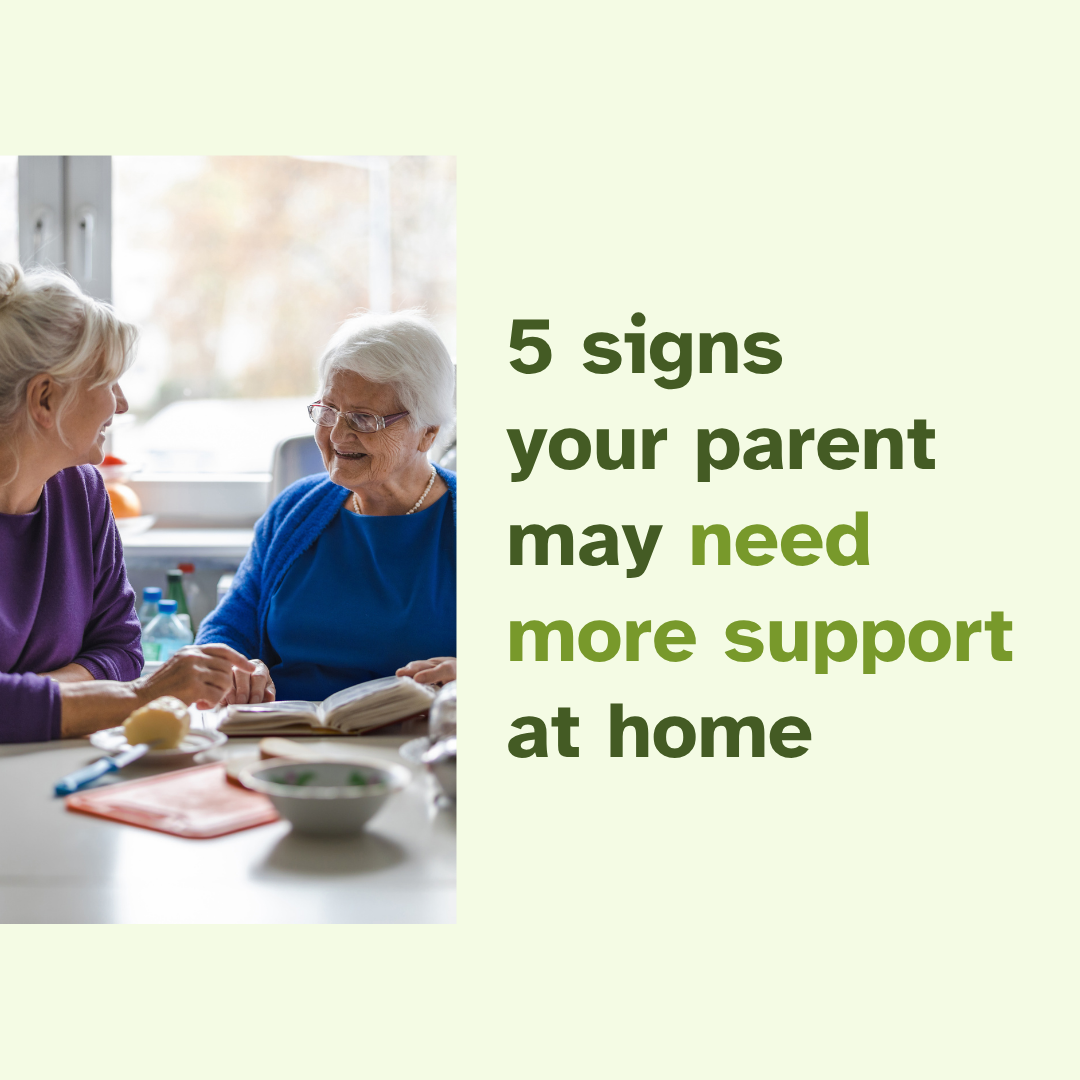
As parents get older, the changes can happen gradually. A missed appointment here, an untidy kitchen there, or a growing hesitation about going out alone. Often, families are not looking for “care” at first – they are simply noticing that something feels different.
Recognising the early signs that an older parent may need support at home can help prevent small challenges from becoming bigger concerns later on. In many cases, a little extra help can support someone to stay safe, confident and independent in the home they know and love.
If you have started wondering whether your loved one may need more support, here are five common signs families often notice first.
1. Everyday tasks are becoming more difficult
One of the earliest signs an elderly parent may need help is struggling with everyday routines that were once manageable.
You might notice:
- Unopened post piling up
- The house becoming untidy
- Difficulty keeping up with laundry or shopping
- Empty cupboards or expired food in the fridge
- Wearing the same clothes repeatedly
These changes are not always caused by forgetfulness. Physical mobility, low energy, arthritis, reduced confidence or loneliness can all make daily tasks harder over time.
Home care support can help with practical routines such as meal preparation, shopping, housekeeping and general day-to-day wellbeing – helping older adults remain comfortable and independent at home.
2. Forgetfulness or confusion is becoming more noticeable
Many families begin searching for support after noticing changes in memory or concentration.
This could include:
- Forgetting appointments
- Missing medication doses
- Repeating questions or stories
- Confusion around dates or routines
- Difficulty managing bills or paperwork
Occasional forgetfulness can be a normal part of ageing. However, when memory problems begin affecting safety, wellbeing or daily life, additional support may help provide reassurance for both the individual and their family.
For some people, these changes may also be early signs of dementia, making early conversations and support especially important.
3. Mobility problems or falls are affecting confidence
A fall, even a minor one, can significantly affect an older person’s confidence and independence.
Families may notice their loved one:
- Moving more slowly
- Avoiding stairs
- Becoming unsteady on their feet
- Feeling anxious about leaving the house
- Spending more time sitting or staying in bed
After a fall or illness, many older adults become worried about losing their independence, which can sometimes lead to isolation or reduced activity.
Support at home can help people feel safer and more confident with everyday routines, while reducing the pressure on family members trying to manage everything alone.
4. They are becoming more isolated or withdrawn
Loneliness in older age can have a significant impact on emotional and physical wellbeing.
Sometimes the signs are subtle:
- Cancelling plans more often
- Losing interest in hobbies
- Seeing friends or neighbours less frequently
- Becoming quieter or lower in mood
- Saying they “don’t want to be a burden”
Families are often surprised by how much difference regular companionship and routine can make. Even a few visits each week can provide conversation, reassurance and social connection that help someone feel more like themselves again.
5. Family members are becoming overwhelmed
Often, the clearest sign that extra support may be needed is the impact caring responsibilities are having on family members.
Many people quietly balance:
- Work commitments
- Children or family life
- Regular visits and phone calls
- Medication management
- Shopping and appointments
- Emotional worry and stress
Over time, this can become exhausting.
Seeking support is not about stepping back from caring for a loved one. In many cases, it allows families to spend more meaningful, less stressful time together.
When should you start the conversation about care?
Many families wait until there is a crisis before exploring support options. But home care does not have to mean giving up independence or making major changes overnight.
In fact, starting support earlier can often help people maintain their routines, confidence and quality of life for longer.
The first conversation does not need to be formal or overwhelming. It can simply begin with:
- “How have you been finding things lately?”
- “Would a little extra help make things easier?”
- “What would help you feel more confident at home?”
Approaching the conversation gently and focusing on wellbeing rather than “care needs” can help reduce anxiety and resistance.
How Provide React Homecare can help
At React Homecare, we understand that every person and every family is different. Support can start with just a few visits a week and grow gradually around someone’s needs and routines.
Whether your loved one would benefit from companionship, help around the home, personal care or more specialist support, our care teams focus on helping people stay safe, comfortable and independent in familiar surroundings.
Looking for advice about support at home?
If you have started noticing small changes in a loved one’s daily life, having a conversation early can make all the difference.
To learn more about home care support and the services available in your area, visit React Homecare or speak to your local branch.
