
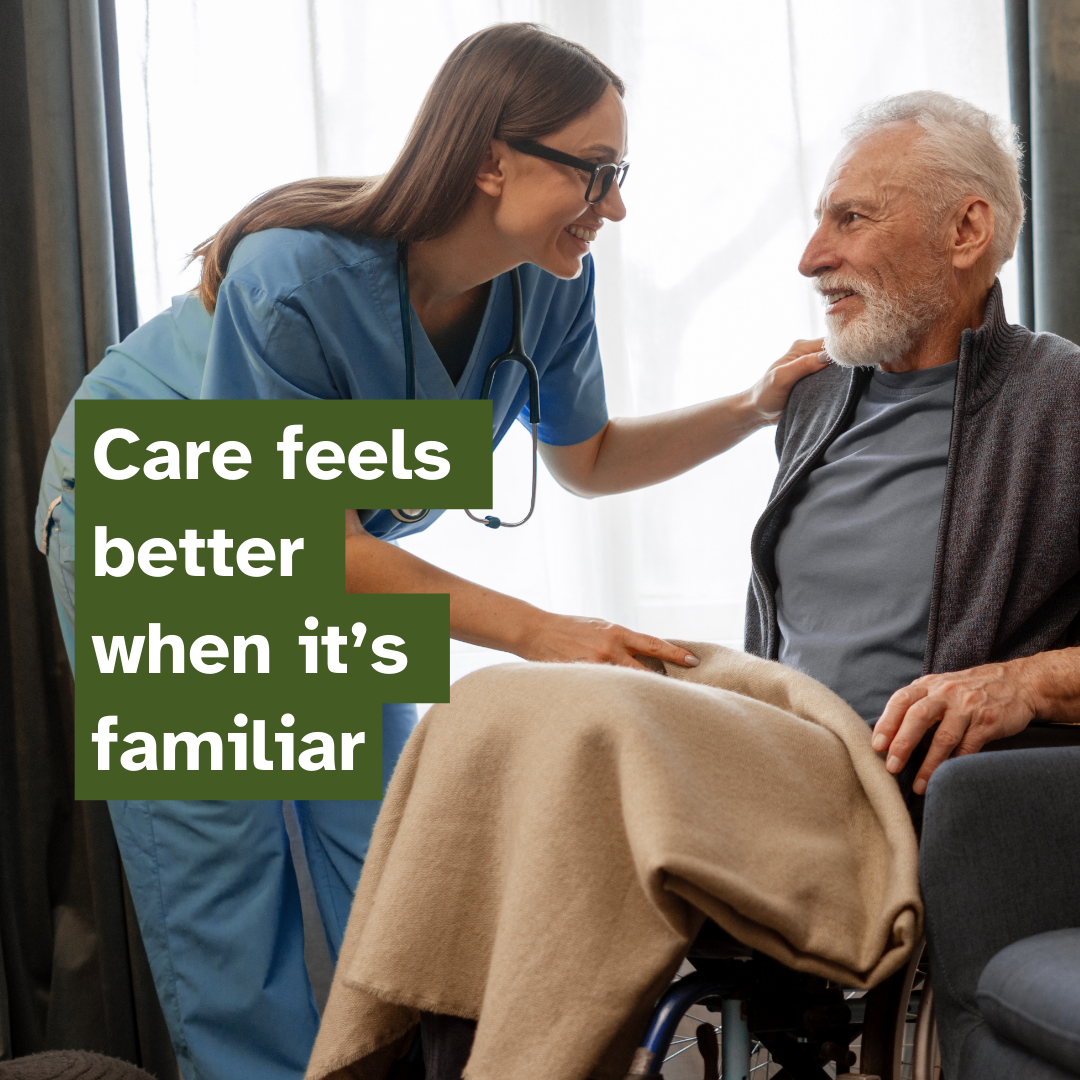
When people receive care at home, familiarity matters. Seeing the same carers regularly, knowing what to expect and building shared routines all help care feel reassuring and respectful.
In home care services, continuity plays an important role in supporting comfort, confidence and trust – for both individuals and their families.
The Comfort of Familiarity in Care at Home
Care at home is a personal experience. When carers understand someone’s preferences, routines and communication style, support feels more natural and less intrusive.
Small details matter – how someone likes their day to start, what helps them feel relaxed, or how they prefer to communicate. Familiar carers are better placed to notice these details and respond with care that feels truly personalised.
For people living with conditions such as dementia, familiar faces can be especially important in reducing anxiety and helping them feel safe at home.
Continuity of Care Builds Trust
Trust in home care builds over time. Seeing the same carers helps people feel more at ease, while consistency allows carers to recognise changes in wellbeing, mobility or routine more easily.
This continuity supports safer, more responsive care at home, helping support adapt as needs change without losing the personal connection that makes such a difference.
Reassurance for Families
Continuity of care doesn’t just benefit the person receiving support – it also reassures families.
Knowing who is providing care, feeling confident that carers understand a loved one’s needs and receiving consistent communication all help families feel informed and supported. This trust can be particularly important when families are balancing care with work, distance or other responsibilities.
Local Care Teams and Stronger Relationships
React Homecare delivers home care through local care teams, allowing relationships to develop naturally over time. This local approach supports continuity and helps care feel rooted in the community.
Familiar faces, local knowledge and shared understanding all contribute to trusted home care that people can rely on.
Care That Feels Reliable and Personal
Continuity and familiarity help home care feel dependable, calm and respectful. When care is delivered by people who know and understand the individual, it supports independence, dignity and confidence at home.
